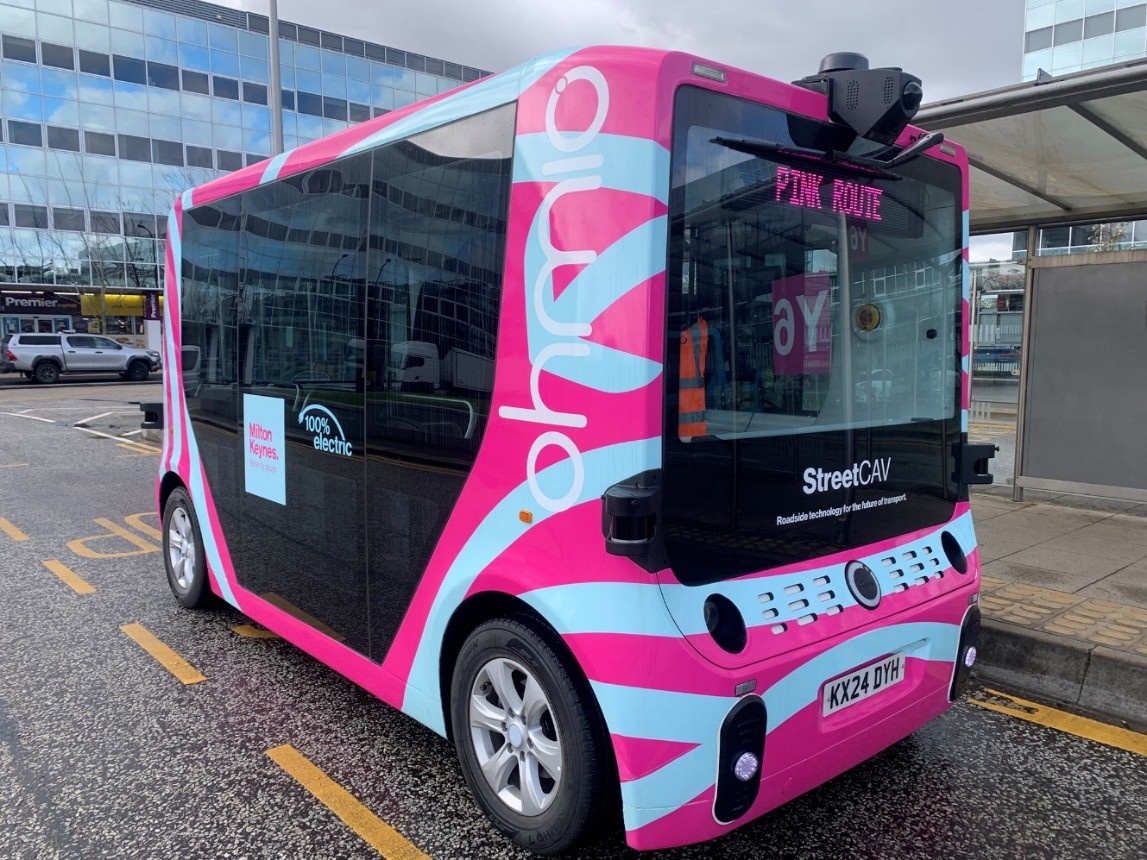
Demand Responsive Transport continues to have a growing role in providing services where other modes are unavailable.
EEH Publishes Demand Responsive Transport Note on Services within the region
By James West
For the full report please see here
Demand Responsive Transport continues to have a growing role in providing services where other modes are unavailable.
Recently my colleague Trevor Brennan and I conducted a review of the five schemes which operate within EEH local transport authorities, ranging from suburban services like MK Connect, to wide ranging services the span larger, more rural areas, like HertsLynx.
Services have proven particularly effective in linking rural communities to key towns and rail stations. Buckinghamshire operates two schemes - PickMeUp and Village Connect - each designed around local geography and dispersed settlement patterns, while Tiger on Demand, managed by the Cambridgeshire and Peterborough Combined Authority, provides flexible coverage across Fenland and surrounding areas.
Our guide sets out where DRT can add most value, how it can complement fixed route services, and the conditions needed for successful deployment - particularly in areas where rising operating costs make traditional models harder to sustain.
It also provides authorities with practical insight into performance, customer experience and design principles, helping ensure that DRT is used strategically rather than as a default replacement for buses.
Together, these schemes demonstrate how DRT can widen access to jobs, services and leisure, support rural mobility and identify latent demand that can later inform fixed route provision. However, common challenges remain: higher operational costs, procurement complexity, VAT inconsistencies, and the need for both digital and nondigital booking options.
EEH’s guide offers clear advice on these issues and highlights the importance of strong branding, clear communication and integration with the wider transport system.
Complementing this, EEH has also secured access to the REMIX planning tool, giving local authorities a powerful way to test service options, assess cost implications and model coverage.
Insights from all five schemes, alongside the guidance and new modelling tools, are now informing EEH’s wider integration work and will help partners plan more targeted, financially sustainable and user-focused DRT services across the Heartland.
Our engagement and feedback from authorities, detailed within this technical note, discusses that whilst DRT is not a single solution to rural connectivity, when planned and designed correctly, it can complement fixed bus and a wider integrated transport network.